Showing posts with label Nonfiction. Show all posts

All Books are Not Created Equal

I've been eyeball deep in selecting books for this coming school year and since I'm (part) Dutch, I'm (part) cheap frugal, so I'm going through our curricula's book lists to see what I can get at the library and what we ought to purchase.

One item on the list: The Everything American Presidents Book by Kelly and Kelly. I've read some from the Everything series before, and while they're interesting and all, they're graphically pretty spare. A quick perusal on Amazon proved there are gajillions of books about US presidents. Surely one could be more visually appealing. Right?

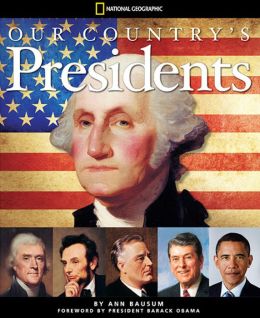
I found what looked like the perfect alternative. Our Country's Presidents by Ann Bausum. Put out by National Geographic, this one was sure to be better. Right? I decided to check out both from the library to see.

Sure enough, the National Geographic book was beautiful. Stunning illustrations, sharp layout. I added the book to my Amazon shopping cart and moved on to the next item.

Then this morning I wondered ... why would the authors of my curriculum recommend the Everything book when the National Geographic book is so obviously superior? Unless it's not. Hmmm.

I did an experiment (pretty smart of me). I read (even smarter!) the section on George Washington in the Natl. Geographic book. And THEN (wait for it - it's really smart) I read the section on George Washington in the Everything book.

Here's what the Natl. Geographic book said:
Ooh, pretty pictures, let's see, bla bla bla, George Washington, bla bla bla. Something about his wife. Bla bla bla, and he died of strep throat.

The Everything book:
Wow, Washington's mother was rot; so he didn't actually cut down a cherry tree! And he didn't have wooden dentures. So that's how he inherited Mount Vernon! Plus he came to believe slavery was immoral and was the only founding father to free all his slaves.

So Natl. Geographic with the dry tone of textbook is going out of the shopping cart, the Everything Book is, well, why don't I just get it from the library? One thing is certain: the curriculum writers really did choose the better book.

Lenten Meditation - A Book by the Man with Two First Names


A Cry of Absence: Reflections for the Winter of the Heart by Martin Marty. HarperCollins, 1993 (1983).

A book for those of us who seldom (if ever) experience a “summery” spirituality. Marty turns to the Psalms which are overwhelmingly wintery and seldom mention the life to come, something I’d never noticed before.
“The psalmist was pleading not for a second life but for meaning in this one. If God is God, these texts suggest, then there should be value already to our days as they pass, but there seems to be all too little. Charm festers and drains away, who lives to enjoy riches? And wind twice puffs as winter advances” (48).
Marty discusses historical views of the afterlife: “Sheol is thus no match for Greek or later rabbinic immortality or Christian resurrection. The Hebrew Scriptures have no language of bliss after life. They give no voice to a hope for a creation that is reflected back into the old world ...” (64). Sheol follows life, he writes, but rather than afterlife, it was seen as an afterdeath—not a comfort or a heaven.

The Psalmists then concentrated on the trustworthiness of God, not the gift of an afterlife, and thus don’t ask for more living after death, rather, “They pleaded with God as the giver of life to endow the meaning of their seasons with value” (64). “Modernists reflect on the past as if all people in it faced death with equanimity because they believed in recompense in a life to come. That belief appeared in the interval between the era of the psalms and our own” (64).

Marty goes on to comment that our current era has again lost consciousness of a life to come. He writes of: “The wintery night, the pain without relief” (66) and asks “can we find a God worthy of trust on this horizon?” A summery faith and self-help philosophies fall silent in the face of such pain, or refuse to hear it at all.

So, he asks, is there a wintery spirituality? What’s wrong with evasion, illusion, escape? There’s no satisfying answer except the “intrinsic value in the act of facing up honestly to the limits of the human condition.” If a reader is to get a “yes” from the psalms, she has to feel the “arctic winds of the landscape of death.” Ah, what an icy breeze that is.

I found the book at times beautiful and inspiring, at times tedious. Making it doubly appropriate for this season, I suppose. Though I wish someone would write a more accessible, less flowery version for us mere mortals.

Not About Music


The Man with the Beautiful Voice by Lillian B. Rubin. Beacon Press, 2003.

I read another of Dr. Rubin’s books, The Transcendent Child, during the MFA, so when I spotted this one at the library, I knew I had to pick it up.

Dr. Rubin, an influential sociologist and psychotherapist, has collected stories of her experiences as a therapist and recorded them here. Both an instruction manual and a fascinating set of case studies, this book provides endless insight into the therapeutic process and human nature. Her storytelling is superb, her love for her work and her patients obvious, her insights applicable to the reader no matter why she’s coming to the book. To learn what a therapist does? To grow as a person? To study good writing? It’s all there.

“No one is ever fully baked,” Rubin writes, recounting words spoken to a patient, “because life is a process that continually confronts us with new challenges that require new adaptations.” Amen. Aren't we all works in progress?

A Mix: Good, Bad, Ugly ...


Black Stars of the Harlem Renaissance by Jim Haskins, Elanora Tate, Clinton Cox, and Brenda Wilkinson. 2002.

Ok, time for a rant. I haven't ranted in a while, have I? Well, maybe. Even so, a rant is due so here it is:

The chapter on Du Bois: Do we have a reliable narrator? Du Bois is introduced as “one of the greatest scholars the world has ever known.” First we have the issue of a lose definition of scholar (what is a scholar, exactly?), and then the absurd grandiosity of the superlative. "Greatest World Scholar!" So Du Bois should be canonized with historical and world scholars such as Aristotle, Plato, Hegel, Hume, etc? Or is the author introducing us to a figure who is made larger than life with exaggeration? Acceptable in a Tall Tale, but not in a biography.

Ok, on to pg. 7: it’s said that Du Bois has an academic career that claims nationwide attention. Yet the development, the “proof” to back up his "nationwide attention" is that he taught English, Latin, Greek, and German at the university level. I know a handful of Classics professors ... sadly, they don't get much attention, locally or nationally. The author then follows up that "nationwide" claim with details of Du Bois' marriage and kids. No development of his scholarship, what this "attention" consisted of, or anything else of real interest. 


In fact, Du Bois' ambivalence toward Nazi Germany is entirely ignored, and his strong beliefs against racial integration never mentioned. I found more detail at Wikipedia than I did in this chapter! Even children deserve 1. the facts and 2. the truth at age/developmentally appropriate levels.

Most other biographies: these sketches are so short. I found myself irritated by the lack of interesting detail and by the inclusion of mundane this-is-what-I-read-in-the-encyclopedia factoids. The sketches don’t live and breathe, they gloss over an entire life in sometimes the boringest possible way, with broad and often clumsy brush strokes that, because of the first line of the first sketch and huge omissions of facts, make me want to double check all the facts. Very text-book-y.

Yet the book is uneven. The section on Langston Hughes was interesting and vivid. It didn’t have the broad-brush feel some of the other sketches had. Hmmm. Which makes me ask if there is a problem with the book as a whole, or an issue common to a multi-authored book. Perhaps some authors are better at research/writing/clarity/intellectual integrity than others?

I also noticed that many of the books referenced in the notes are secondary sources at best. Honestly, I wish I'd seen Wikipedia referenced - there might have been more details!

How to Build a Mosque


Mosque by David Macaulay. Houghton Mifflin, 2003.

The intro is sort of dry, but the melding of fiction and nonfiction with fascinating detail on construction held my interest to the end. Yet why was there such a need for bathing? (I know it’s ritual bathing, but the text doesn’t tell me this.) There’s a ton of info on engineering, but not much on culture. The how is thorough; the why is underdeveloped.

Collection of Poems, linked


Carver: A Life in Poems by Marilyn Nelson. Front Street, 2001.

Would it be admitting ignorance to say I don’t like poems I don’t understand? I mean, I sort of understand “The Perceiving Self,” but I mostly don’t. It makes me wonder if the purpose of poetry is to communicate, to feel smart, to make your reader feels unsmart ...

“[T]ouched our stamens/pleasured us with pollen.” Obviously sexual, but what to do with a lynching? Other images in that one confuse me too. Am I too dense to read poetry? 

I do love the artistry and form of this book: poems from various perspectives all drawing a picture of Carver and the world in which he lived. The sad truth: I had to Google Carver to make sense of the poems (I dimly remembered his name being related to peanuts from some lesson in preschool—my lord, preschool!). Thank God for Wikipedia. 

I wish Nelson had found some way to contextualize the poems for those of us who are a. young (since this is in the junior nonfiction section), b. products of the modern educational system, c. missed a lot of school (literally or metaphorically) even if a and b are not the case, or d. are just plain ignorant. 

Lovely words, lovely poems, but the poems are sort of like single petals of a yellow flower. We don’t know if we have a daisy or a dandelion. And how we understand and appreciate the flower depends upon where we find it: a garden, the lawn, a clogged downspout. “His students/see the light of genius/through the dusky window of his skin”—beautiful petals, but of what? Where? Many stunning poems like, “From an Alabama Farmer.” But the title says it’s a life in poems. Somehow I missed the life, found only poems.


Nelson's other book for this age group however, Fortune's Bones, is among my favorites of all time.

On Homesick


Homesick: My Own Story by Jean Fritz. 1982.

The story of Fritz’s childhood in China. A memoir for children full of fun stories and written in an accessible fairy-tale tone. Rich detail, vivid storytelling, a likable protagonist. There is very little difference between this work of nonfiction and many of the novels I’ve read. Though I’ve yet to read a quote as fun as this one:
“A cat is a cat. There are no foreign cats, no Chinese cats, no capitalist cats, no Communist cats. Just cats.” --Yan Sze-Fu
Love it! Although I'd guess my cat is a Union cat ...

You Mean Women Won Rights? News to Me.


If You Lived When Women Won Their Rights by Anne Kamma. Scholastic, 2006.
Now here is a compelling and well-told story! Kamma never loses her narrative thread, she includes quotes and details, and she keeps the details to those that ground the story or move it forward. She, in short, finds a plot and develops it. Aside: This is exactly what I want to do with my project.

Anyway, the language is simple and straightforward, yet it doesn’t sacrifice artfulness for a sterile informative tone (like some hideous books on sea turtles I read first semester), rather the tone is engaging, the voice consistent. An important book!

Another Reason My Yard is Full of Holes


How to Dig a Hole to the Other Side of the World by Faith McNulty. 1970.

Second person, a how-to booklet on digging to the center of the earth and beyond. Fact meets fun. The fantasy element combined with scientific detail make this a favorite and true classic. But hey, my copy didn't come with a CD!

That aside, my kids frequently dig holes around the yard, and they truly are trying to break through to the earth's core. So far we've gotten not much beyond two feet. But hey, when you're only four feet high, that's not bad!

On a Tightrope


The Man Who Walked Between the Towers by Mordicai Gerstein. Roaring Brook, 2003.

I love Mordicai Gerstein. I have since I got his book on Noah for my children. His art, his prose, his creativity—delicious. This story is likewise gripping and written in the same tender tone. Gerstein keeps the story moving forward with a clear dramatic arc. Philippe had a goal, obstacles to that goal, and a plan to achieve it. Well done to Philippe and Gerstein!

Beautiful Snowflake Bentley


Snowflake Bentley by Jacqueline Briggs Martin. 1998.

Martin brings Bentley’s love and obsession to the child on a mitten-full of snow. Imagine a book about photographing snowflakes making the reader cry. But Martin does it, gently and in a voice I’ve had the privilege to hear in person! The copies of Bentley’s actual photos at the back of the book show the crisp beauty and incredible detail that fueled his passion. Inspiring.

Oh, and if you ever have the pleasure of meeting Jackie Briggs Martin, she's as lovely as her book. I want to adopt her as my mom.

My Favorite Queen: Elizabeth


Behind the Mask: The Life of Queen Elizabeth by Jane Resh Thomas. 1998.

Dense, detailed, drenched in history. Jane’s passion comes through every intimate detail. I wonder if it shouldn’t have been YA. I could imagine my 9yr-old son asking, “What’s a lover, Mom?” And the sheer density of information: all the political intrigues, much pre-understanding about the times assumed ... it screams YA to me.

  • As a former student of Jane's, I can see many of JRT’s writing habits: powerful verbs, clear sentences, no improper referents. These (hahahaa!) do make for a forward-moving style. The great complexities of Elizabeth’s story are communicated with stunning clarity and depth.
  • Whine of the day: Not enough pictures, and if a publisher were going to do such a heavy book, why not do the whole thing in color? I used to do graphic design - color doesn't cost that much more. Not these days.
  • Prodigious research both into Elizabeth’s person as well as the times during which she lived. All I can say is Wow.

Fiction Meets Nonfiction: Quack!


Make Way for Ducklings by Robert McCloskey.

Natural science and strong plot combine to make a classic.

This is a cute story about a mother duck seeking the best home for her ducklings. Facts about molting, duck predators, food sources come to life with simple, happy illustrations that use many varying angles and perspectives. Repetition of names makes for a fun, if lengthy, read-aloud.

Chilling History Lessons


Hitler Youth: Growing Up in Hitler’s Shadow by Susan Campbell Bartoletti. Scholastic, 2005.

Fascinating and similar in tone and writing style to Darkness Over Denmark. Both take the individual stories from this horrid time in history and weave them into a steady and powerful narrative. I found myself caught up in the history—like that Hitler coming to power after the great depression meant a world-wide work shortage and tight immigration quotas so that the Jews who might have otherwise escaped to friendly countries couldn’t.
  • Little different from fiction in that a visual image is painted with detail (none of it superfluous). 
  • Shows so clearly that the Germans being satisfied with simple answers seems childlike because those driving Hitler’s movement were indeed children. The children weren’t trained to think, rather to obey. Reason was set aside entirely. 
  • Several stories within stuck with me: Aktion T4, the top secret program to kill physically and mentally disabled people, and White Rose, the group of students who published the truth. Ultimately the group was caught and beheaded. Also the description on page 146 of the young soldiers, captured now, being led into a liberated concentration camp. Inmates flanked the boys, ghastly, like wraths. 
  • The key quote on page 149: “... the children and teenagers of the Third Reich had been betrayed, deserted, and sacrificed by a party and a regime that had used them to attain power.” 
  • Fabulous details in a straightforward narrative.

Song of the Waterboatman


The Song of the Waterboatman and other Pond Poems by Joyce Sidman. Houghton Mifflin, 2005.

Stunning illustrations. And lovely poems. I’m not sure they capture essence as well as Zolotow. I’m perhaps looking for an Annie Dillard of children’s poetry, but maybe Sidman is more accessible to a child than Zolotow (who is more Dillardy).

  • --The Caddis Fly is fascinating and I love the use of the word whorled. What a cool word!
  • The NF sidebars are clear and concise, but I found myself wishing they were a little more lyrical.
  • Colors used in the illustration for Season’s Campaign are delicious. I wanted to roll in them, to wake up there. That poem reminds me of an eternal favorite and classic, Hailstones and Halibut Bones.
  • Water Bear is fascinating too. This is why macro-evolution takes far more faith than I can muster.

Dark Tales of Dark Times


Darkness Over Denmark by Ellen Levine. Holiday House, 2000.

The moving story of Danish resistance to Hitler’s reign of terror. Levine finds the human stories in the history and weaves them together deftly, putting a face on events that would otherwise be abstract and distant from contemporary youth. Some thoughts:

  • Details: that’s where the devil is, to be sure. Levine’s text is drenched in detail, adding authenticity and making her scenes memorable.
  • Personal stories: stories of individuals obtained through research and interview are interwoven with the history to enhance and illumine the narrative.
  • Vivid: The writing is clear and precise, yet passionate. The author’s interest in and enthusiasm for this topic is clear on every page. I kept remembering the urgency and horror of Vonnegut’s Slaughterhouse Five.

A Happy Little Book about Death


Bodies From the Ash: Life and Death in Ancient Pompeii by James M. Deem. Houghton Mifflin, 2005.

Details must make sense and matter to the story. Does it matter that eighty-one loaves of bread were baking? I’m not sure. Regardless, more notes:
  • I’ve noticed that the writing style is not very different between books for YA and MG. There’s no obvious attempt to limit vocabulary between this and, say, the book on Marian Anderson, The Voice that Challenged a Nation. 
  • nteresting how despite being a vision into ancient times there are abundant details. Especially science integration on how the flows worked and how the heat seared flesh from bone, boiled blood, etc. Vivid and creepy—perfect for nine-year-old St. Nick who swiped this book and now has it squirreled away in his room.

It Really is Perfectly Normal


It’s Perfectly Normal by Robbie Harris. Illus. Michael Emberley. . 1994.

Clear, accessible, and always a tone of normalcy, this book strives to be a thorough and objective introduction to all things sex from anatomy and baby-making, to sexual abuse, homosexuality, puberty and STDs. Several things stood out and merit comment.

  • The illustrations are both engaging and rather shocking in their level of detail. And yet they lack any feeling of being scientific or explicit. They mirror the text, making sex, our bodies and intercourse seem perfectly normal.
  • While the author strove for objectivity, he ended up with relativism (because, of course, objectivity is impossible). Harris states that masturbation, for example, is considered sin in some religions, but goes on to say it’s perfectly normal. Which would mean it can’t be a sin and therefore (although he doesn’t go this far) those religions that call it a sin must be wrong. (Sorry, Logic was my fave course in undergrad.)
  • The “perfectly normal” theme can be taken too far. I felt calling a Caesarian section “normal” was a bit of a stretch. And some of his information is downright flawed. Care of the uncircumcised penis, for instance. The foreskin should never, ever, ever be forcibly retracted, particularly not in infancy. This can lead to breaking of normal adhesions between foreskin and glands, which can lead to a build-up of scar tissue, infection, and many other complications. He also missed a major method of birth control, apparently mistaking the outdated “rhythm method” with the reliable but natural method used by many across the globe (called the Sympto-Thermal method, in case anyone wonders, which I doubt. Still, it is very much not the old rhythm method).

Readers Who Know What They Like


Handel, Who Knew What He Liked by MT Anderson. Candlewick Press, 2001.

A fun change from what one expects in a nonfiction book, Anderson’s text is witty and a mite sarcastic, with humorous illustrations.

The book tells an actual story, rather than miscellaneous facts, which not only makes for better retention, but makes the book interesting. How novel! An interesting book on a long-dead composer. I loved the fly on the wall in the first illustration, as well as the sarcasm about Handel’s wig.

P.S. Quite different from other Anderson reads (Octavian Nothing, Feed ...)

Contact Form

Name

Email *

Message *